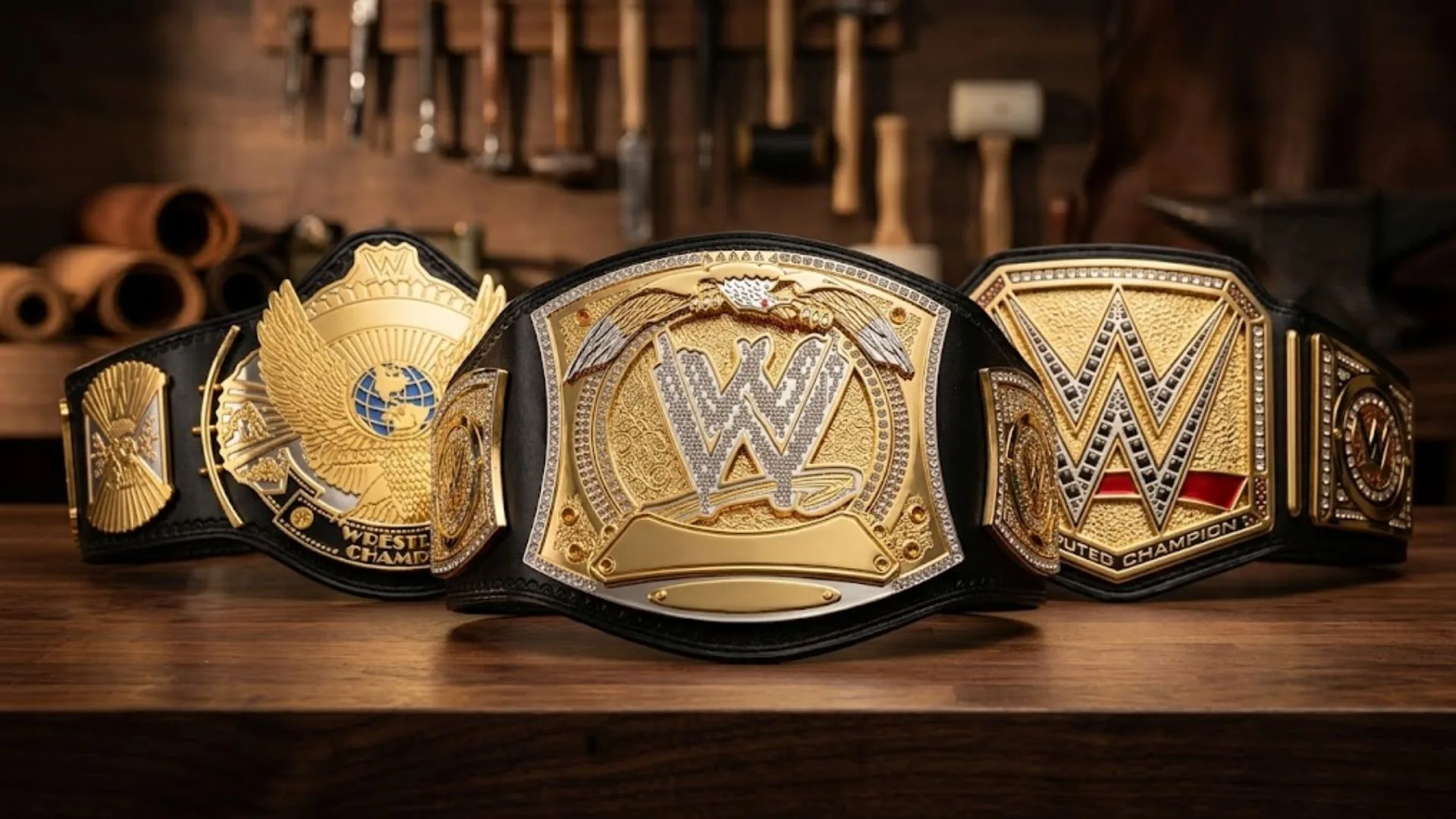
We’ve been making championship belts in Sialkot since 2002. In that time, we’ve rebuilt almost every WWE Championship design you can name, from Bruno Sammartino’s 1960s belt to the Undisputed belt Roman Reigns carried during his 1,316 day reign.
This guide walks through every major version of the WWE champion belt. For each one, you’ll see what it looked like, what changed, and what it takes to build it at the bench. We also fix a few facts that other belt history pages get wrong.
Retro Shields makes WWE style replica belts. We aren’t affiliated with, endorsed by, or licensed by WWE.
Key Takeaways
- The WWE Championship started in 1963, and its belt has changed design more than a dozen times since.
- Each era is easy to spot by four things: strap color, logo style, center plate shape and side plates.
- WWE TV championship belts are gold plated metal, not solid gold, and every champion gets at least two copies.
- From our bench, the 1988 Winged Eagle is the hardest classic design to reproduce well.
Table of Contents
What Is the WWE Champion Belt?
The WWE champion belt is the physical title belt for the WWE Championship, the company’s oldest active title. It dates back to April 25, 1963, when the World Wide Wrestling Federation (WWWF) crowned Buddy Rogers as its first champion.
The title has carried many names since then. It was the WWWF title, then the WWF title, and today it’s billed as the Undisputed WWE Championship on SmackDown. The belt changed shape almost every time the name or the company changed.
That’s what makes WWE belt history fun to study. Each design is a time stamp. If you know what to look for, you can date a photo of a champion just by looking at the belt on their shoulder.
How to Read a Championship Belt: The Parts That Change From Era to Era
Every championship belt is built from the same handful of parts. Learn these seven parts, and you can tell any WWE belt era apart in seconds.
- Center plate: The big metal piece in the front. It carries the main logo and title name. Its outline (round, shield, globe or seven sided) is the fastest clue to the era.
- Side plates: The smaller plates on each side of the center. Older belts had up to 10. Modern belts have two large ones.
- Nameplate: A small plate with the champion’s name. Some eras used it, some dropped it.
- Divider bars: Thin metal strips between the center plate and side plates. They first showed up on the 2013 design.
- Strap: The leather band the plates are mounted on. Its color (black, red, blue, green) changed often.
- Snaps: The metal studs that close the belt behind the wearer’s back.
- Stones: The colored or clear gems set into the plates. Look closely at their color and count, because each era used them differently.
Every Major WWE Championship Belt Design, Era by Era
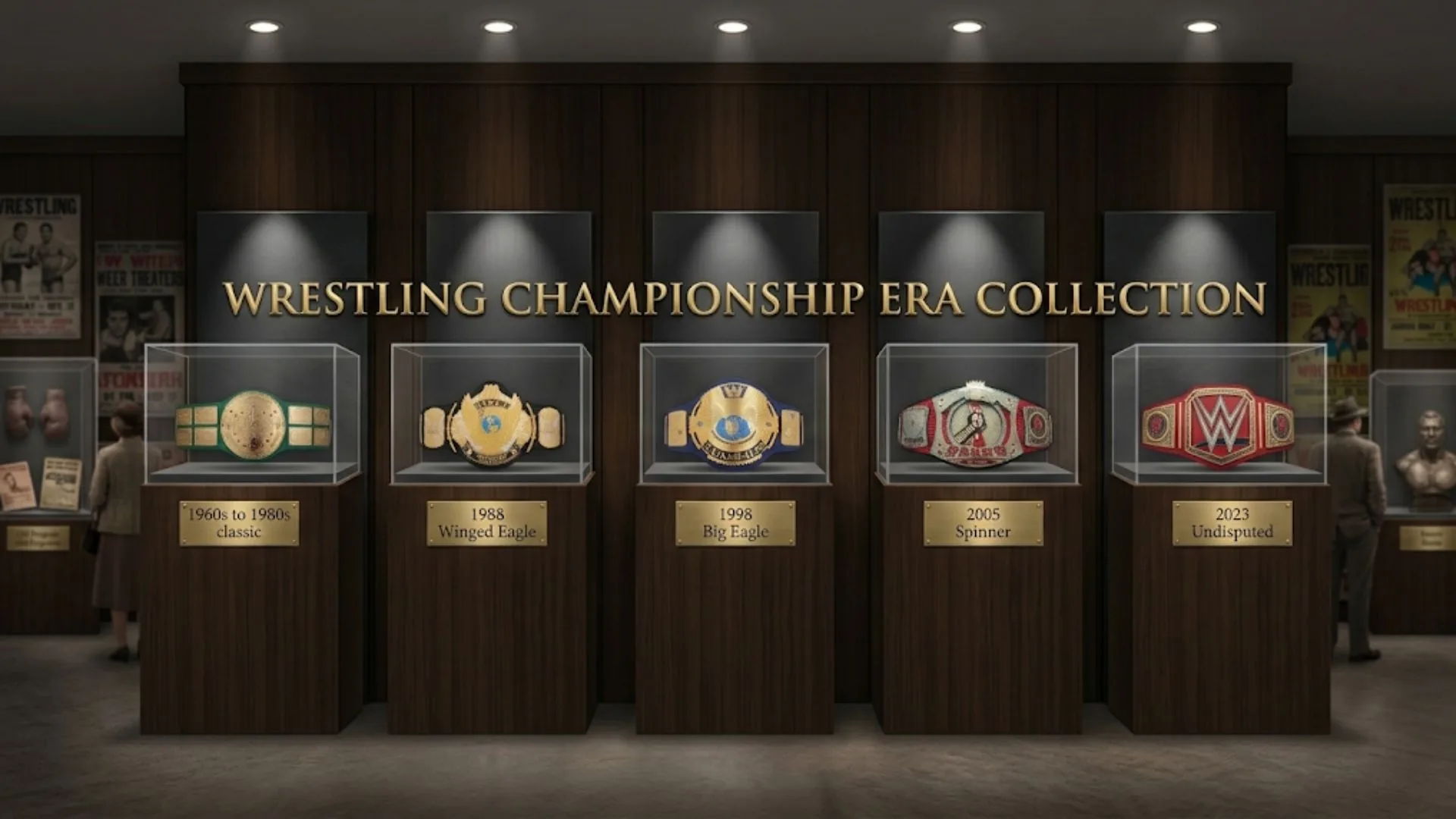
Here’s the full lineup at a glance. Strap color and center plate shape are the two fastest ways to date any WWE championship belt.
| Years | Nickname | Strap color | What gives it away |
|---|---|---|---|
| 1963 | Rogers belt | Red | Center plate shaped like the U.S. map |
| 1963 to 1971 | Bruno belt | Blue | Crowned globe with two wrestlers |
| 1971 to 1983 | Morales and Backlund belts | Indigo, red, then black | Eagle center, many small side plates |
| 1983 to 1984 | Big Green Belt | Green | 8, later 10, side plates for past champions |
| 1984 to 1988 | Hogan belts | Black | Eagle and banners; the 1986 version has 8 flags |
| 1988 to 1998 | Winged Eagle | Black, plus Warrior’s colors | Eagle wings stretch past the plate edge |
| 1998 to 2002 | Big Eagle | Blue, then black | Fully round center plate |
| 2002 to 2005 | Undisputed | Black | Nameplate, eagle on a globe |
| 2005 to 2013 | Spinner | Black | Spinning WWE logo |
| 2013 to 2014 | Big Logo | Black | Seven sided plate, cutout logo |
| 2014 to 2023 | Network Logo | Black | Swappable side plate centers |
| 2023 to today | Undisputed | Black | Black stones, textured metal behind the logo |
1963 to 1971: The First WWWF Belt and Bruno Sammartino’s “Holy Grail”
Many history pages say the first belt was a plain gold plate on a black strap. It wasn’t. Buddy Rogers wore a U.S. championship belt he already owned. Its center plate followed the outline of the continental United States, with a circle for the champion’s photo, on a red leather strap.
After Bruno Sammartino won, he got a new belt on a blue strap. It showed a crowned globe and two grapplers. That belt was stolen in September 1965, so a near copy replaced it and ran until 1971. The International Professional Wrestling Hall of Fame calls that second version the “holy grail” of wrestling artifacts.
We’ve rebuilt the Bruno belt many times. Its flat, engraved look is very different from the stone heavy belts that came later.
1971 to 1983: The Pedro Morales and Bob Backlund Belts
This stretch saw quick changes. In 1971, Morales got a belt on an indigo strap with three shield shaped plates and a cross at the center. A year later, it changed to a red strap with an eagle in the middle and six side plates for different countries.
In 1973, a version on a black strap with two grapplers above the eagle took over. Bob Backlund carried it into the WWF era. The belt still said “WWWF” even after the company dropped the extra W in 1979. “Superstar” Billy Graham wore a red leather version of the same design.
1983 to 1988: The Big Green Belt and the Hogan Belts
The Big Green Belt arrived in January 1983. It was the first belt made under the WWF name. The center plate showed a wrestler holding up a belt with a globe behind him. Its 8 side plates, later 10, honored past champions.
Hulk Hogan then went through three designs of his own. The 1984 and 1985 belts paired an eagle with “World Heavyweight Wrestling Champion” banners. Collectors often mislabel the late 1985 belt as “Hogan ’86.” It has a globe, Roman columns and olive branches, plus 8 national flags across four side plates. We reproduce the Big Green Belt and the Hogan ’86 regularly.
1988 to 1998: The Winged Eagle
One popular history page credits Randy Savage with debuting this belt. In fact, Hogan introduced it on February 5, 1988, just before his first reign ended.
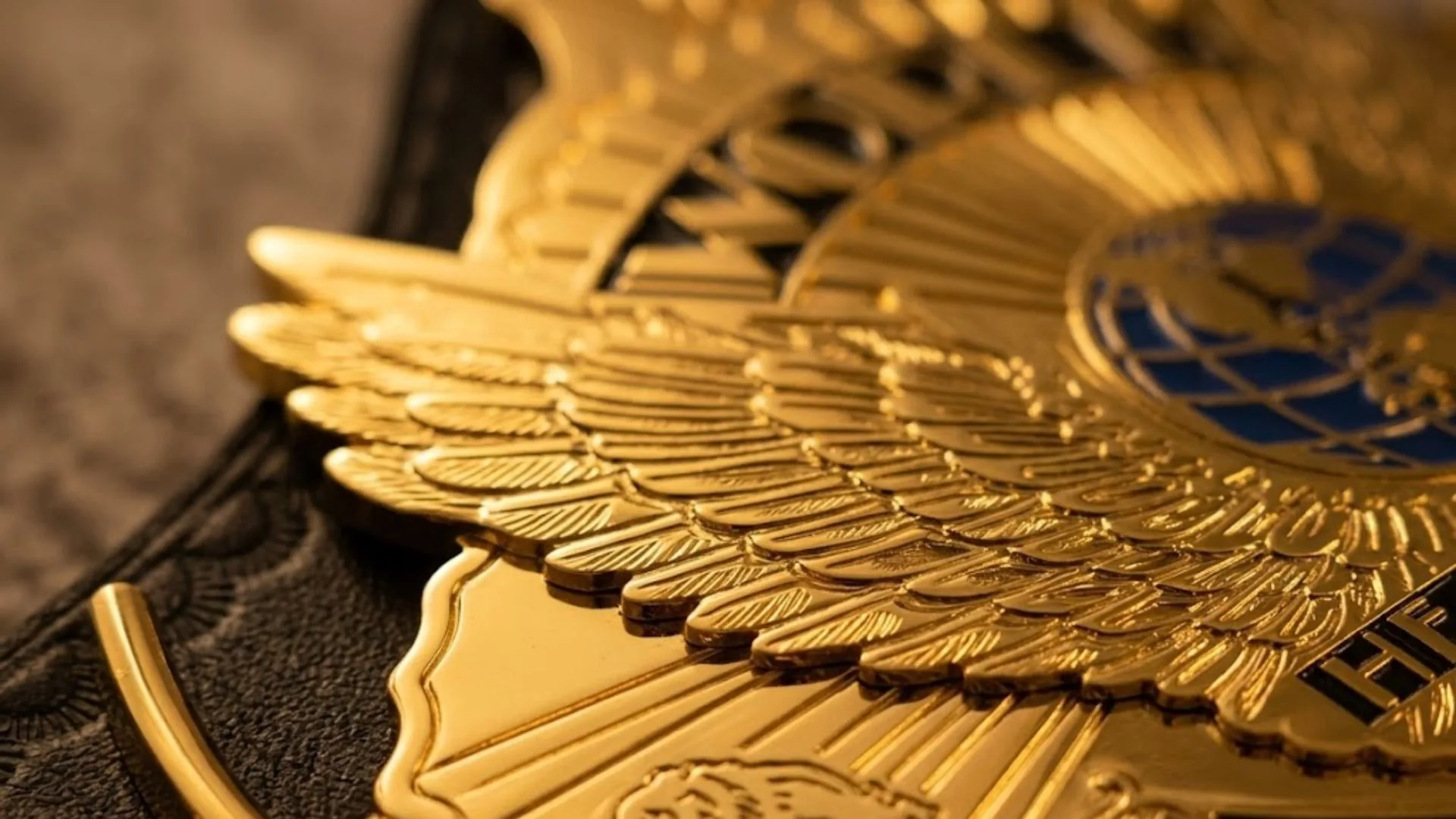
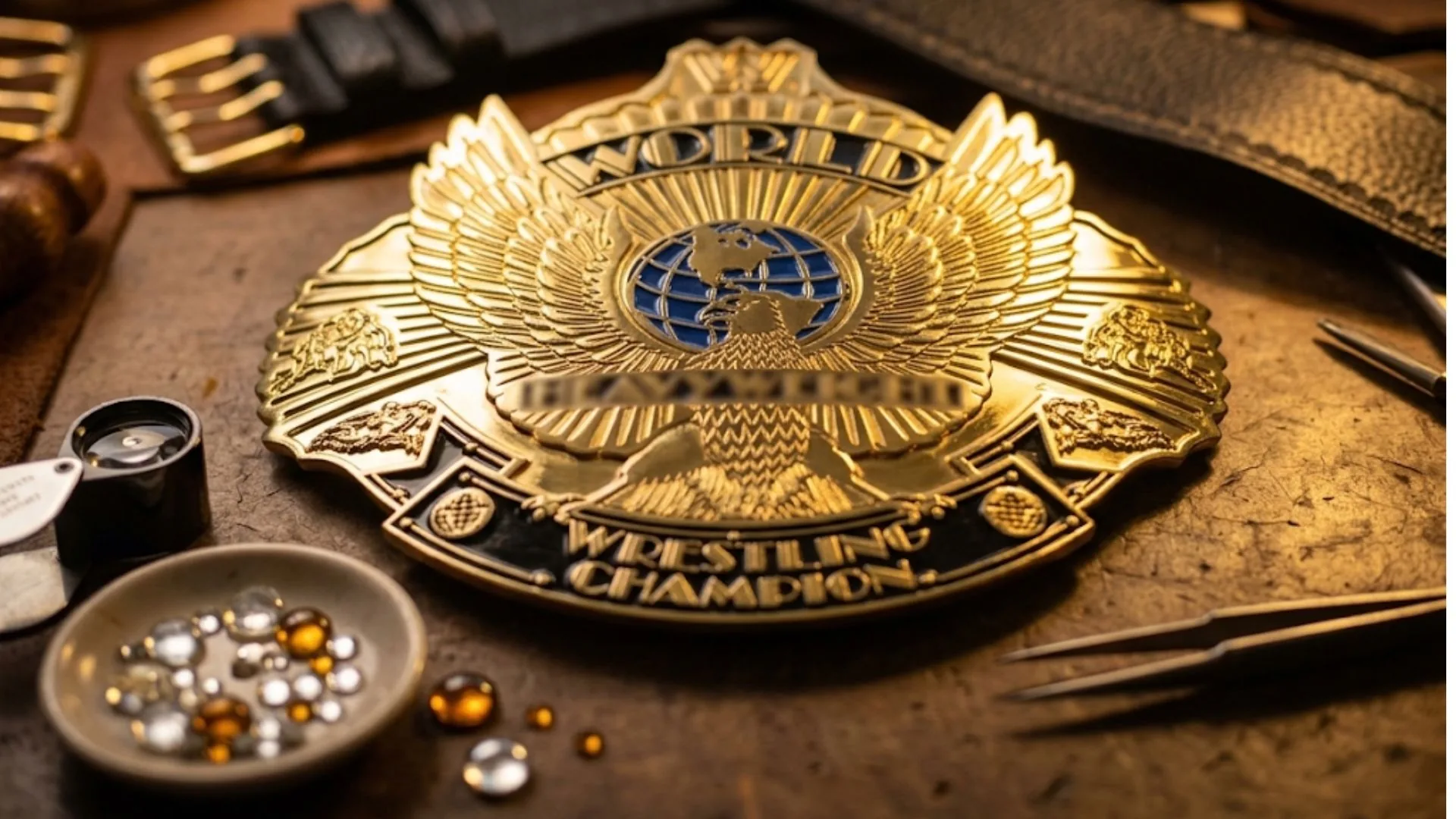
The nickname comes from the eagle’s wings, which reach out past the edge of the center plate. The plate carries the block WWF logo and “World Heavyweight Wrestling Champion.” Four identical side plates sit on each side. The standard strap was black. Ultimate Warrior also wore it on white, light blue, yellow and purple straps, and Sgt. Slaughter wore the purple one too.
1998 to 2002: The Big Eagle and the Smoking Skull
Stone Cold Steve Austin received the Big Eagle WWE champion belt in March 1998. Its center plate became fully round, and the inner side plates added the McMahon family crest: a lion holding a shield.
Most pages show it only in black. It actually debuted on a blue strap with the block WWF logo. It switched to the scratch logo and a black strap in November 1998.
Austin also wore a custom “Smoking Skull” belt during his second reign that year, with his skull logo and rattlesnakes. The Rock had his own “Brahma Bull” version made, but it never appeared on TV.
2002 to 2005: The Undisputed Belt
After Chris Jericho unified two world titles in late 2001, he carried two belts at once: the Big Eagle and the Big Gold Belt. (The Big Gold Belt has its own long story.) On April 1, 2002, Triple H got a single new belt instead.
New York tattoo artist Keith Ciaramello designed it. It brought back a nameplate and set an eagle on top of a globe, with stars shooting out. It even changed logos partway through its run: WWE swapped the WWF scratch logo for its own after the company’s rename in May 2002.
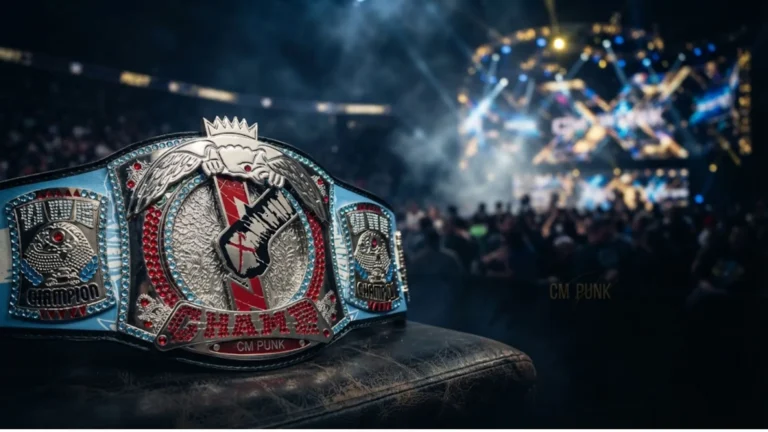
2005 to 2013: The Spinner Era, From Cena to CM Punk’s 434 Days
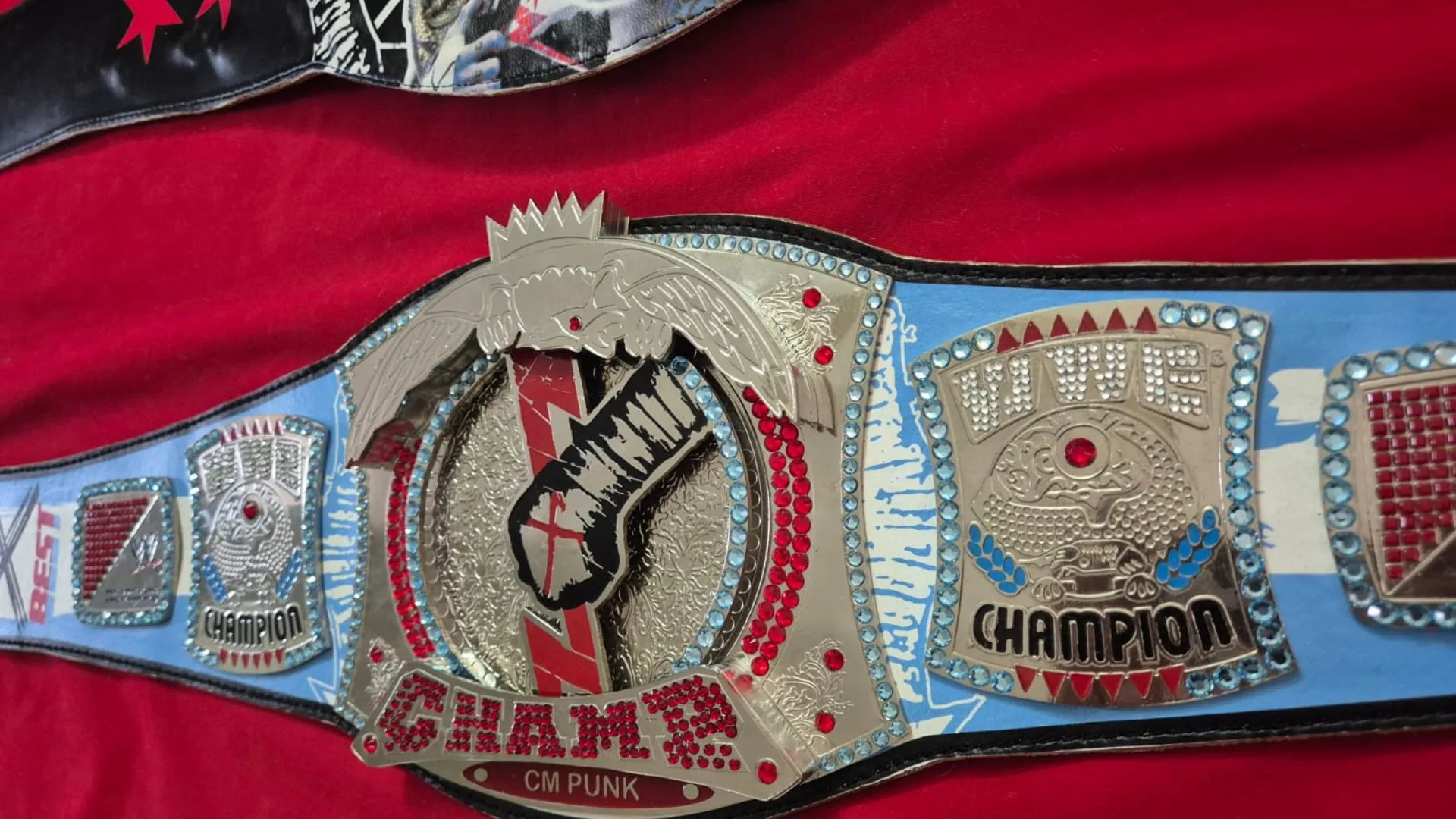
John Cena brought in the Spinner in April 2005. The scratch WWE logo, set with clear stones, could rotate like a spinning car rim. It sat between an eagle on top and the word “Champ” with a nameplate below.
Over time, WWE locked the logo in place. The Miz flipped it upside down to make an “M.” Edge swapped it for his “Rated R” logo. But CM Punk’s 434 day reign, from November 2011 to January 2013, is the run most fans tie to this belt today. It was the longest reign of the Spinner era. (To see how a spinning center actually mounts, read our look at this year’s new WWE title designs.)
2013 to 2014: The Big Logo Belt
The Rock unveiled this design on February 18, 2013. Orange County Choppers, of American Chopper fame, designed it together with belt maker Dave Millican.
The stone covered WWE logo sits in a cutout inside a large seven sided plate. The leather strap shows through the cutout, pressed with a bumpy “nugget” texture. A gold “Champion” banner sits below, and gold divider bars appear here for the first time. The side plates have removable centers, so a champion’s own logo can replace the default red globe and crown.
2014 to 2023: The Network Logo Belt and Removable Side Plates
Brock Lesnar got this update on August 18, 2014, the night after SummerSlam. It’s nearly the same build as the Big Logo belt, but it uses WWE’s new corporate logo. “World Heavyweight Champion” runs in very small letters along the bottom.
The default side plates switched to gold and red world maps. This layout became WWE’s blueprint: the Universal title and the women’s world titles used the same outline, with different colors and wording.
2023 to Today: The Undisputed Belt and Roman Reigns’ 1,316 Days
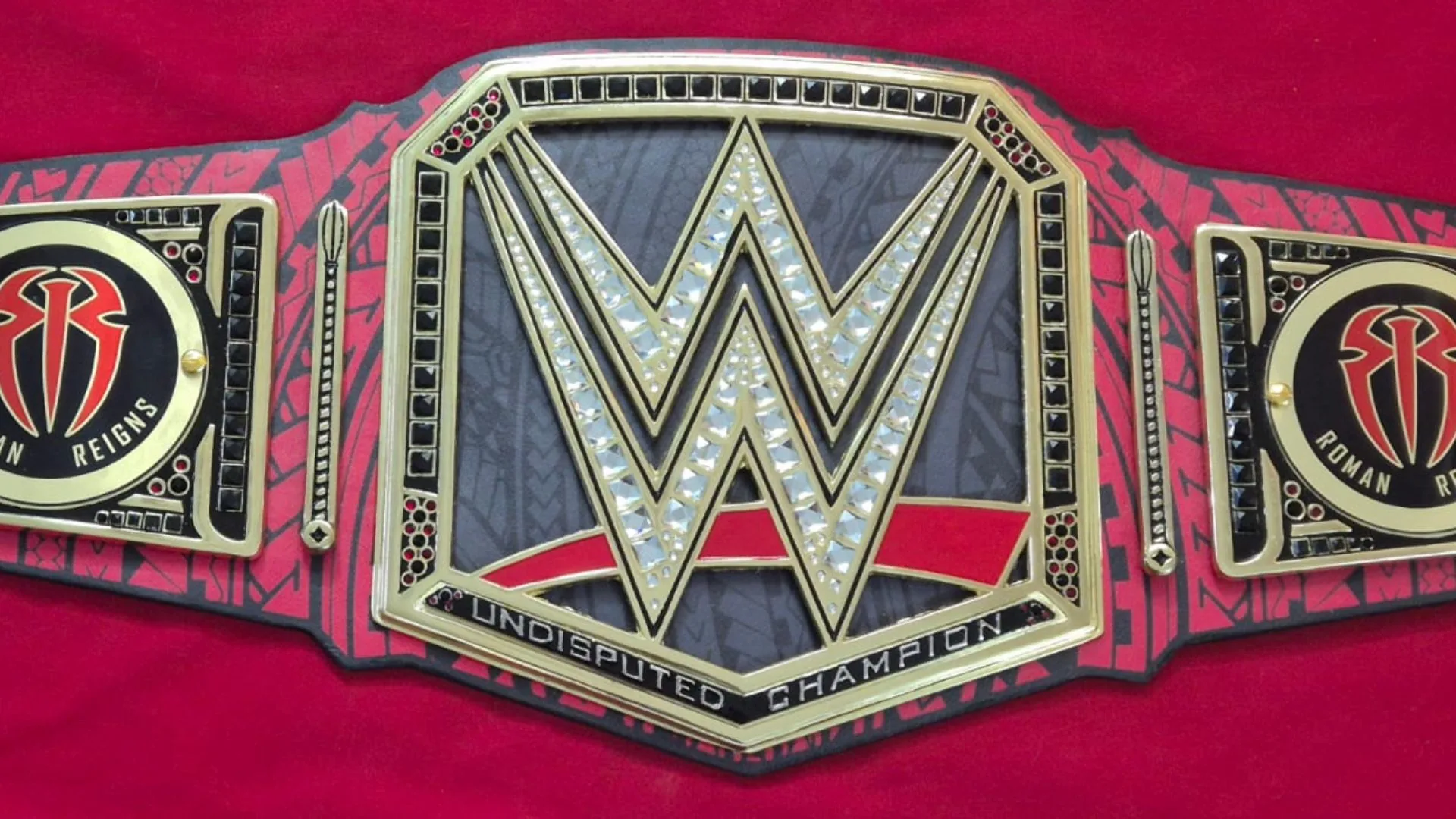
Roman Reigns received the current WWE champion belt design on June 2, 2023, to mark his 1,000th day as champion. It keeps the Network Logo shape on a black strap, with three key changes:
- Black stones cover the WWE logo instead of clear ones.
- The nugget texture behind the logo is now part of the metal plate, not the leather.
- The bottom reads “Undisputed Champion.”
Reigns’ Universal title run reached 1,316 days before Cody Rhodes beat him at WrestleMania XL in April 2024. The same belt still represents the title today.
A Belt Maker’s Take: Favorites, Hard Builds and What Fans Actually Order
Most WWE belt history pages rank belts by looks. We see them differently, because we’re the ones cutting, etching and setting the stones. Here’s what 20+ years at the bench has taught us about these designs.
My Favorite: The CM Punk 434 Spinner
My favorite WWE championship belt to build is the CM Punk 434 Spinner. The base design is fun on its own, with a big logo, an eagle and a lot of stone work. But the “434” version adds a story fans connect with: one of the longest title runs of the modern era.
We can build the center as a working spinner or as a fixed plate, whichever the buyer prefers. The working version takes more care, because the logo has to turn freely and still sit flush.
The Hardest to Reproduce: The 1988 Winged Eagle
The Winged Eagle is the toughest classic design to get right. The problem is the wings. They break past the outline of the center plate, so the plate can’t follow a simple shape like a circle or shield.
That makes the outline harder to cut cleanly. The fine feather lines also have to stay sharp after etching and plating. If the wings look even slightly off, fans spot it right away, because this is one of the most photographed belts in wrestling.
What Customers Order Most
Our three best selling WWE style designs are:
- The WWE Divas belt, with its butterfly center
- The Roman Reigns 1316 belt, based on the current Undisputed design
- The CM Punk 434 Spinner
The first one surprises people. When the Divas title debuted in 2008, many critics mocked the pink butterfly and said it looked like a toy. WWE retired it in 2016. Yet it’s our top seller. The belt critics hated is the one buyers love most. To us, that proves a belt’s value comes from the memories tied to it, not from how reviewers ranked it.
A Customer Story: The Photo Strap CM Punk Belt
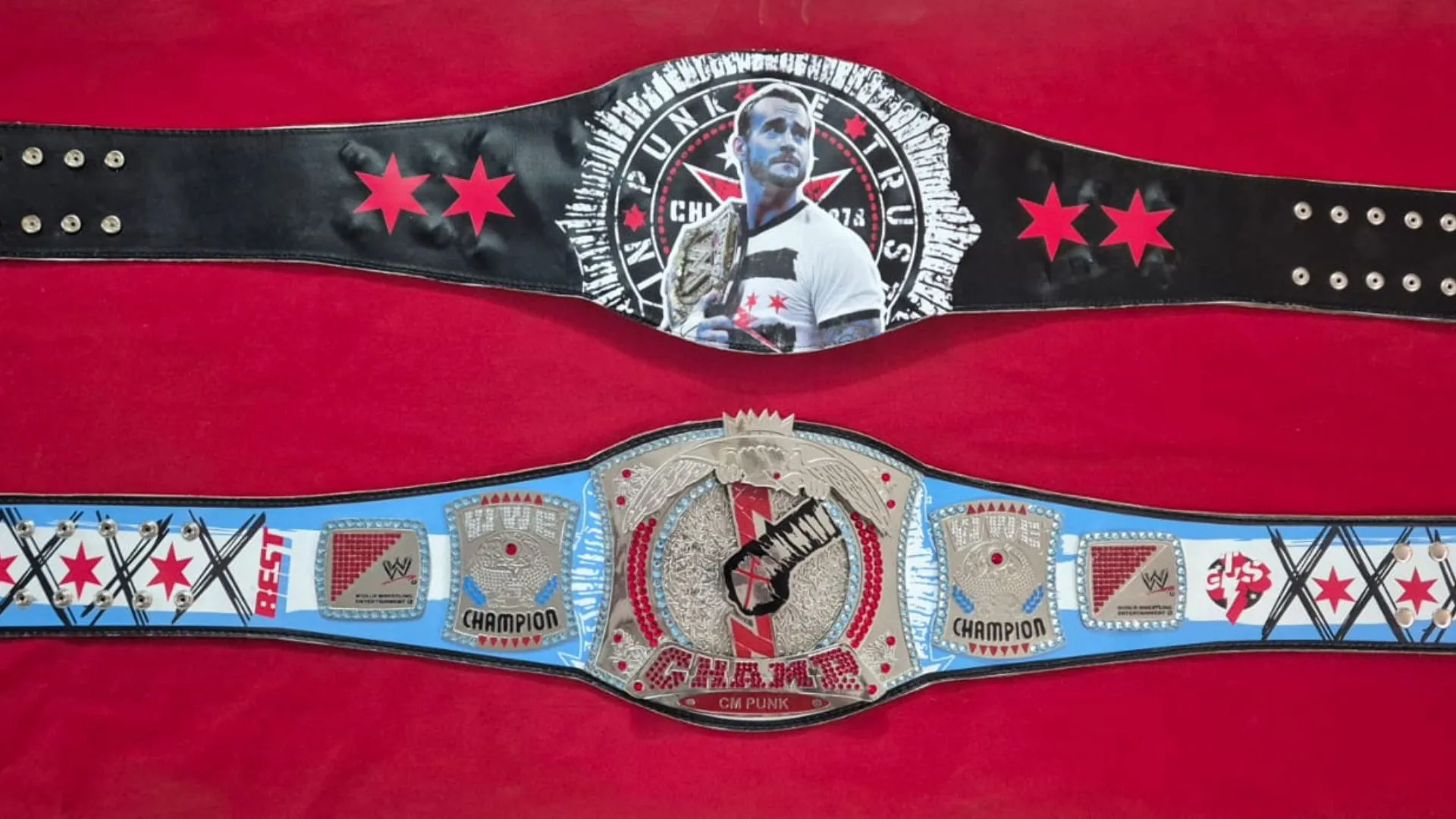
One build that stands out is a custom CM Punk belt for a customer who asked us to keep their name private. Instead of a plain leather strap, the strap carried printed photos, paired with WWE style plates. We made the plates in 4 mm brass, all in house.
It shows where custom belts are heading. More fans want a belt that tells their own story, with their photos, names or dates built into a classic design.
How Is a WWE Championship Belt Made? TV Belts vs. Replicas
A WWE championship belt made for TV is built by hand from metal plates finished in gold, then mounted on a leather strap by a specialist belt maker. Replicas follow the same basic steps, but with different materials and a very different price.
A few names come up again and again on the TV side. Reggie Parks was the industry’s main belt maker from the 1960s to the middle of the 1990s. J-Mar built WWE’s 3D Big Gold Belt from 2003 to 2011. Today, Dave Millican makes most of the belts you see on WWE television.
Here’s how a TV WWE champion belt compares to one of our replicas:
| Feature | WWE TV belt | Retro Shields replica |
|---|---|---|
| Plates | Handmade metal plates | Etched brass or zinc plates |
| Finish | Mostly gold, sometimes silver or rhodium | Gold, chrome or dual tone |
| Stones | Mostly simulated stones | Good quality glass stones (no rhinestones or zirconia) |
| Strap | Leather | Synthetic leather as standard, real leather on request |
| Spinner center | Fixed on most modern belts | Working or fixed, your choice |
| Weight | Disputed (see below) | About 1.5 kg (3.3 lb) |
| Copies | At least two per champion | Made to order, one at a time |
| Price | Complex designs can pass $10,000 | Varies by design and plate thickness |
| Build time | Not public | 8 to 15 working days after design approval |
We use etching for WWE style plates. Etching uses a chemical bath to eat away part of the metal, which leaves the logo and lettering raised. It gives sharp, flat detail, which suits modern designs built around a big logo. If you want to compare the metals themselves, see our guide to brass vs. zinc plates.
Our process for a WWE style order runs in four steps:
- We confirm the design with you on WhatsApp before any work starts.
- We etch the plates in brass or zinc and finish them.
- We set the glass stones and build the spinner, if your design has one.
- We mount the plates on the strap and send you photos and video before shipping.
WWE Championship Belt Myths, Busted
Fans repeat a lot of WWE champion belt “facts” that don’t hold up. Most of what you’ve heard about solid gold and real diamonds is wrong.
- Myth: The WWE champion belt is solid gold. It’s gold plated metal. Plating puts a thin layer of gold over a base metal, which is how Dave Millican describes the belts he builds for WWE TV. One widely shared article claims each champion keeps a solid gold copy at home, but no belt maker has confirmed that.
- Myth: Each champion gets one belt. Millican says every WWE champion gets at least two: one to travel with and one used only on TV.
- Myth: Those are real diamonds. Most TV belts use simulated stones. The 2013 Big Logo belt reportedly used faux diamonds. Real gems are the exception, such as Ted DiBiase’s Million Dollar Championship.
- Myth: There’s one official weight. Sources disagree badly. One popular page says a TV belt weighs about 5 to 6 lb, while another says it often tops 10 lb. Neither cites a source. For a real reference point, WWE lists its own commemorative CM Punk 434 replica at about 7.38 lb.
Other WWE Championships and Their Belts
The WWE Championship is the oldest title, but it isn’t the only one. As of October 2026, there are 21 WWE championships (see the full list) spread across Raw, SmackDown, NXT, Evolve and WWE ID.
These are the main roster WWE championships you’ll see most on TV:
| Championship | Brand | Type |
|---|---|---|
| Undisputed WWE Championship | SmackDown | Men’s world title |
| World Heavyweight Championship | Raw | Men’s world title |
| WWE Women’s Championship | SmackDown | Women’s world title |
| Women’s World Championship | Raw | Women’s world title |
| Intercontinental Championship | Raw | Men’s secondary title |
| United States Championship | SmackDown | Men’s secondary title |
| Women’s Intercontinental Championship | Raw | Women’s secondary title |
| Women’s United States Championship | SmackDown | Women’s secondary title |
| World Tag Team Championship | Raw | Men’s tag team |
| WWE Tag Team Championship | SmackDown | Men’s tag team |
| WWE Women’s Tag Team Championship | Shared | Women’s tag team |
One retired belt still matters a lot to collectors: the Divas Championship. It ran from 2008 to 2016, when WWE replaced it with a new Women’s Championship at WrestleMania 32. As we covered above, its butterfly design is still our best selling WWE style belt.
WWE Champion Belt FAQs
How much does a WWE Championship belt weigh?
There’s no confirmed official weight. Published claims range from about 5 lb to over 10 lb, with no source given. WWE lists its own commemorative CM Punk 434 replica at about 7.38 lb. Our WWE style replicas weigh about 1.5 kg (3.3 lb).
Who makes WWE Championship belts?
Dave Millican makes most of the belts on WWE television today. Earlier belts came from makers like Reggie Parks and J-Mar. Orange County Choppers designed the 2013 Big Logo belt together with Millican.
What is the current WWE Championship belt called?
It’s the Undisputed WWE Championship. The current belt design dates from June 2023, when Roman Reigns received it for his 1,000th day as champion.
How many championships does WWE have?
There are 21 WWE championships as of October 2026, across Raw, SmackDown, NXT, Evolve and WWE ID. The two men’s world titles are the Undisputed WWE Championship on SmackDown and the World Heavyweight Championship on Raw.
Want One of These Designs on Your Wall?
Every WWE championship belt in this guide started as a sketch on a designer’s desk. If one of these eras is your era, we can build it for you, from the Bruno belt to the Undisputed title, with your name on the nameplate if you want it. Browse our WWE style replica belts or send us the design you have in mind.
Retro Shields makes WWE style replica belts. We aren’t affiliated with, endorsed by, or licensed by WWE. All WWE names and logos belong to their owners.