
Type “kickboxing belt” into a search bar and you get two completely different objects. One is a cotton belt tied around a student’s waist that changes colour every time they pass a grading. The other is a leather strap and a brass or zinc plate, handed to whoever wins the last fight of the night.
We make the second kind. Our workshop in Sialkot, Pakistan has been building championship belts since 2002, and we’ve made kickboxing title belts for gyms and amateur leagues in New Zealand, Australia and across Europe. But gym owners ask us about the first kind all the time, usually when they’re planning a grading day and a fight night in the same season.
So here’s the whole picture: the kickboxing belts in order from white to black, how the ranking system actually works, and where championship belts sit above all of it.
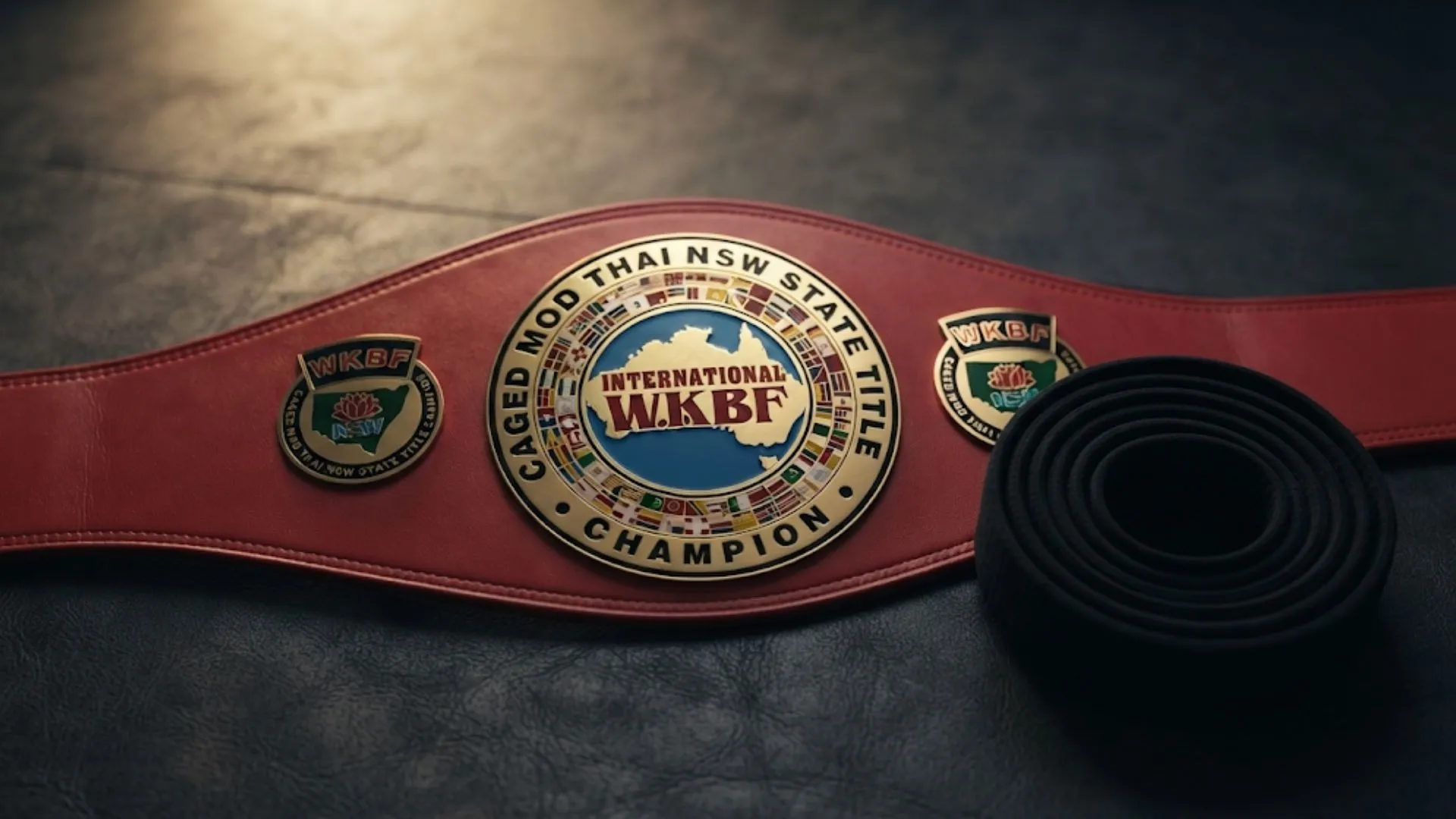
Table of Contents
Is There an Official Kickboxing Belt Order?
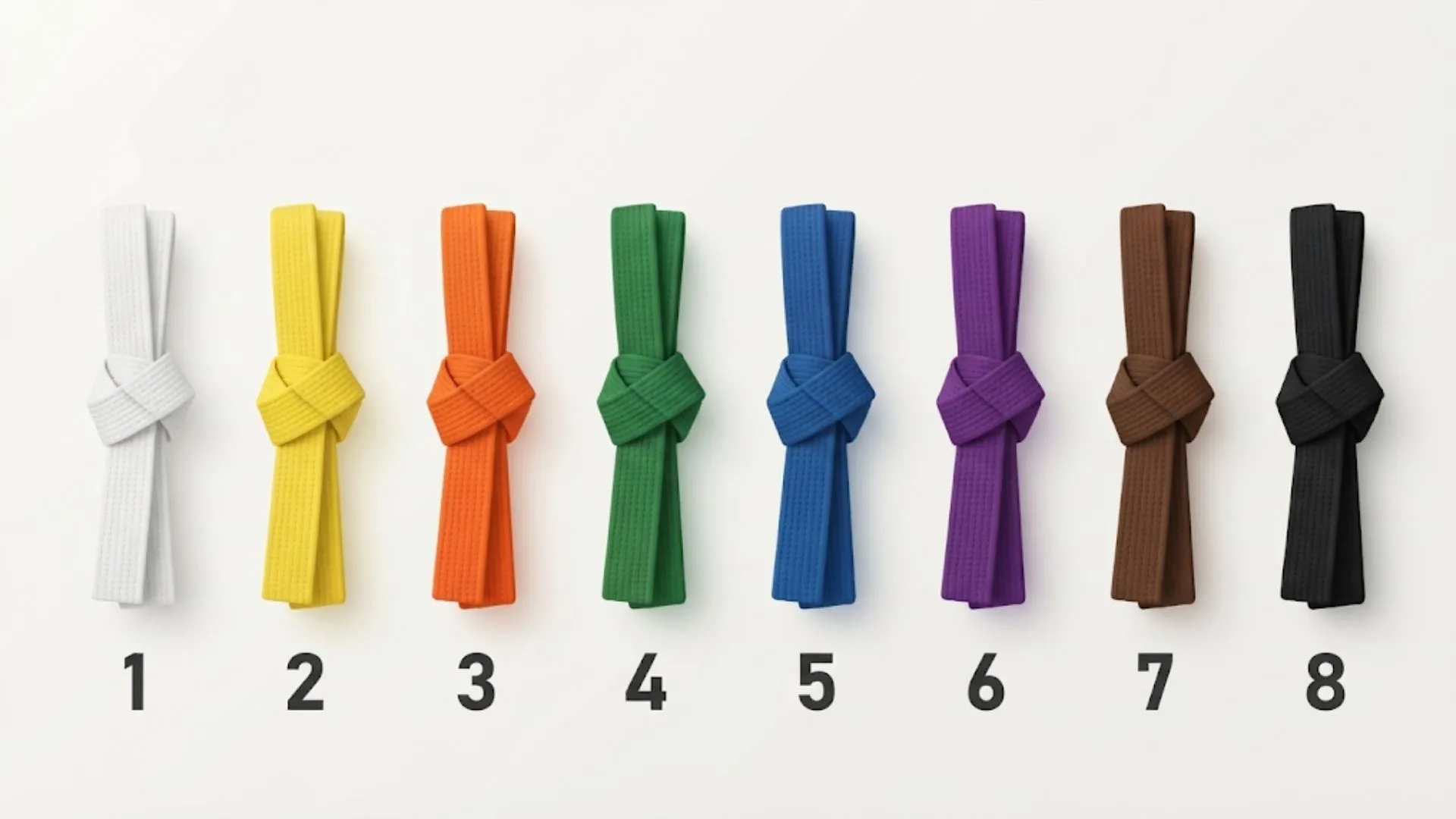
No. Kickboxing has no single worldwide grading system, but most schools that grade put their kickboxing belts in order using eight colours: white, yellow, orange, green, blue, purple, brown and black, with black split into ten dan degrees.
That’s because kickboxing grew up as a fighting sport, not a syllabus. American kickboxing took off in the 1970s, and the Professional Karate Association held the first kickboxing world championships in September 1974. Fighters were judged by results in the ring, not by the colour around their waist.
Coloured belts came later, when gyms started teaching kickboxing to beginners, kids and fitness members who wanted a way to track progress. Most borrowed the structure from karate, which is why the colours look familiar. It’s also why the kickboxing belt levels at your gym might not match the gym across town.
Kickboxing Belts in Order: All 8 Belt Levels From White to Black
Here are the eight kickboxing belt levels most US and international schools use, in order, from your first class to black belt.
Beginner Belts: White, Yellow and Orange
White is where everyone starts. You get it on day one, no test needed. Yellow is usually the first real grading, and training guides put it at roughly three to six months in. By orange, you should have clean basic punches and kicks, a proper guard, and footwork that doesn’t fall apart when someone hits back.
Intermediate Belts: Green, Blue and Purple
This is the middle of the kickboxing belt levels, and where the sport starts to feel like fighting. Green and blue belts add combinations, defence and controlled sparring. Purple usually means you can spar with intent, read an opponent, and link kicks, punches and knees without thinking about it.
Advanced Belts: Brown and Black (1st to 10th Dan)
Brown is the last step before black and the one most students take longest to leave. Black belt is split into ten degrees, called dans, often shown as stripes or bars on the belt. First dan is the goal most students chase. Tenth dan is rare and normally reserved for people who’ve spent decades teaching and building the sport.
How the UK Kickboxing Belt Order Is Different
When UK schools put kickboxing belts in order, most add a red belt straight after white, which gives nine grades instead of eight. Everything else shifts down one place. Here’s how the two orders line up, based on common gym curricula:
| Grade | US / international order | UK order |
|---|---|---|
| 1st | White | White |
| 2nd | Yellow | Red |
| 3rd | Orange | Yellow |
| 4th | Green | Orange |
| 5th | Blue | Green |
| 6th | Purple | Blue |
| 7th | Brown | Purple |
| 8th | Black (1st to 10th dan) | Brown |
| 9th | Black (1st to 10th dan) |
If you train in the UK and your gym skips red, that’s not wrong either. Always go by your own school’s syllabus.
How the Kickboxing Belts Ranking Works: Stripes, Dans and Gradings
You move up the kickboxing belts ranking by passing a grading: a test in front of your instructor covering technique, fitness, pad work and, at higher levels, sparring. Pass, and you tie on the next colour.
Many gyms also split each belt into stripes, usually tape bars on the end of the belt, so progress shows between gradings. Once you hit black, the kickboxing belts ranking carries on through the dan degrees.
How Long Does Each Kickboxing Belt Take?
For adults, each colour usually takes around 3 to 6 months at the lower grades and longer as you climb. Kids’ programs often give 1 to 4 stripes per belt so a child earns something new every 6 to 10 weeks.
Training frequency matters more than anything. Two classes a week and three classes a week are very different timelines.
Do Your Belts Transfer if You Change Gyms?
Sometimes. Because there’s no universal system, a new gym may ask you to grade again or start you one or two levels lower until they’ve seen you train. It isn’t personal. They’re matching you to where you’d sit in their kickboxing belt levels.
Do Professional Kickboxers Wear Coloured Belts?
No. Professional kickboxers are ranked by their fight record and the titles they hold, not by grading belts. At that level, the belt you earn is a championship belt.
Nobody asks a pro what colour belt they are. They ask who they’ve beaten and what they’re holding. And that’s where kickboxing championship belts come in, the ones we spend our days building.
Kickboxing Championship Belts: The Titles Fighters Actually Win
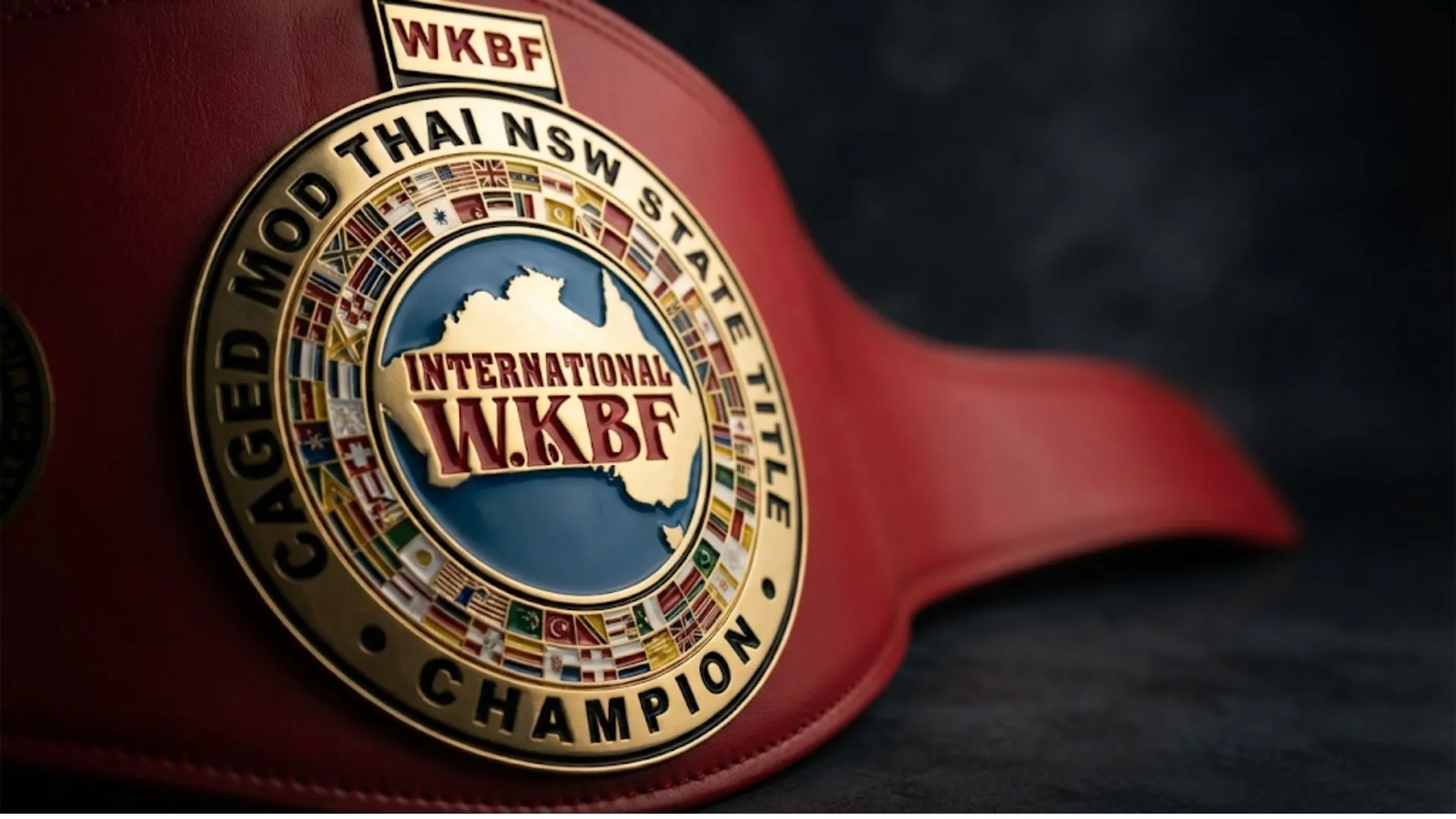
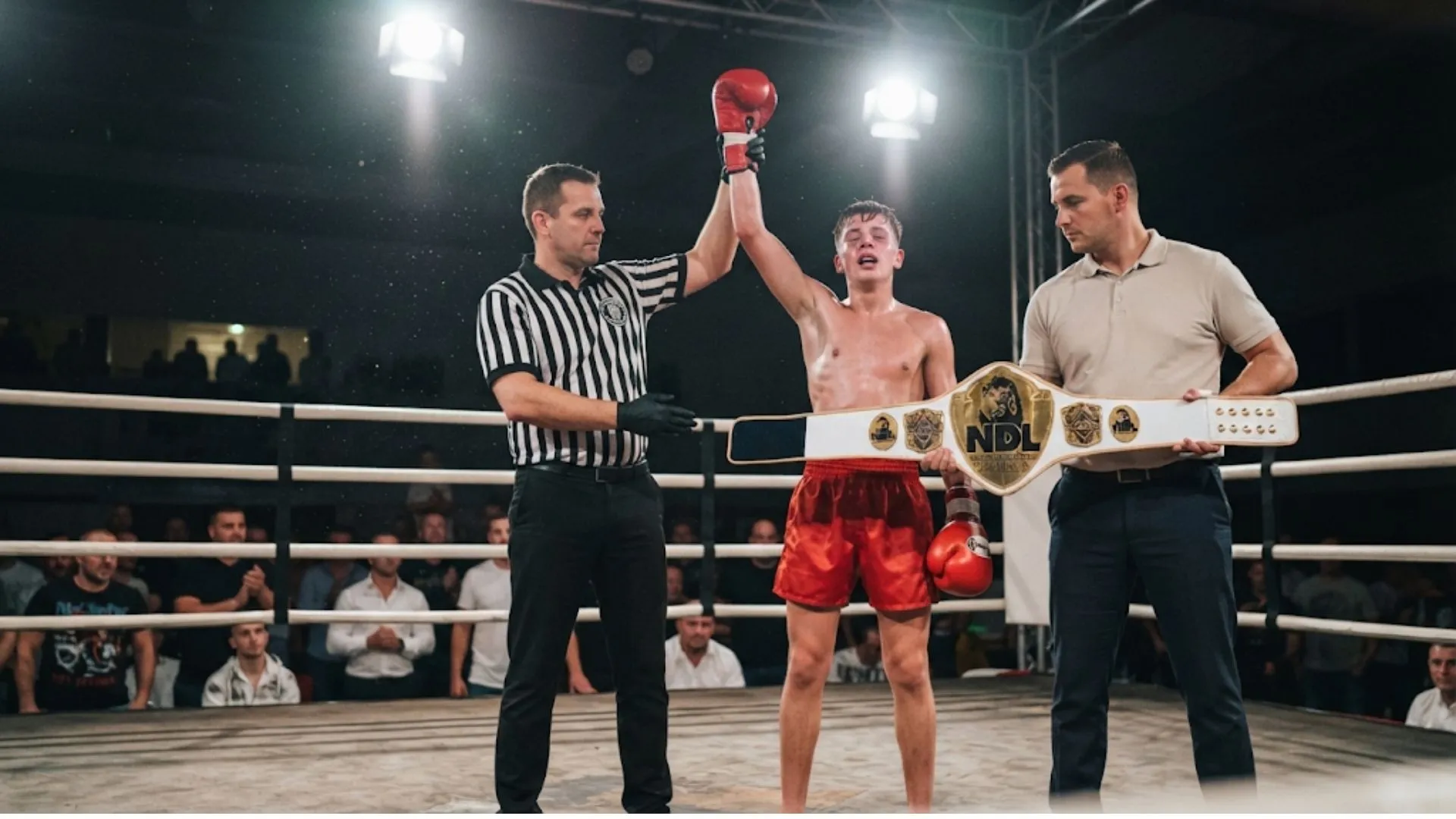
A grading belt tells your gym what you know. A championship belt tells everyone what you did. Kickboxing championship belts are awarded for winning a title fight or a tournament, and they’re built to be held over your head, not tied around your waist.
Who Awards Kickboxing World Titles
There’s no single world champion in kickboxing, just like there isn’t in boxing. Titles come from a few different kinds of organisation:
- Amateur governing body: WAKO is the kickboxing federation recognised by the International Olympic Committee, with provisional recognition in 2018 and full recognition in July 2021.
- Sanctioning bodies: long-running organisations like the World Kickboxing Association (WKA) and the International Sport Karate Association (ISKA) sanction title fights across many countries.
- Pro promotions: promotions such as GLORY and ONE Championship crown their own champions inside their own events.
Which title ranks highest is argued about endlessly by fans. What doesn’t change is the belt: every one of these organisations hands its champion a physical plate and strap.
Why Gyms and Amateur Leagues Commission Their Own Title Belts
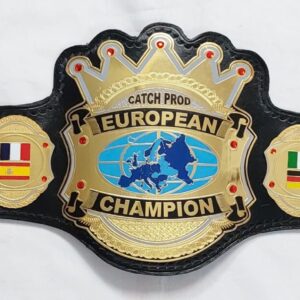
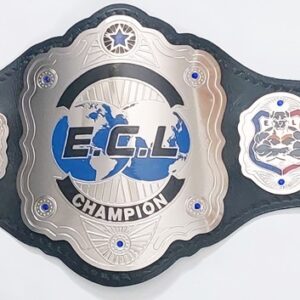
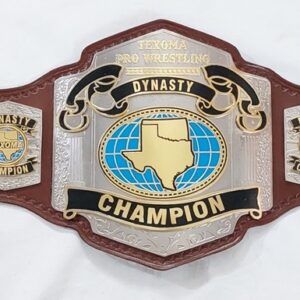
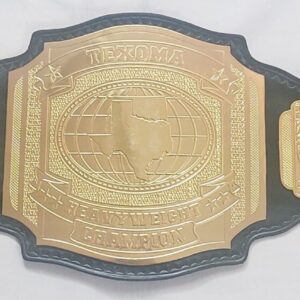
Most of the kickboxing championship belts we make never go near a world title. They go to gyms and amateur leagues in New Zealand, Australia and across Europe running their own fight nights, inter-club tournaments and in-house championships.
The reason is simple. A medal gets forgotten in a drawer. A belt gets carried around the ring, photographed, posted, and hung on the gym wall where every new member sees it. For a gym, that’s a reason to keep training. For a league, it’s a reason for fighters to sign up next season.
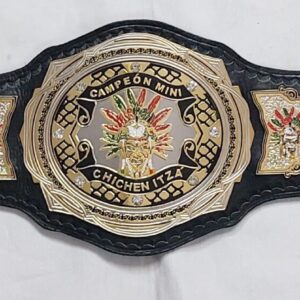
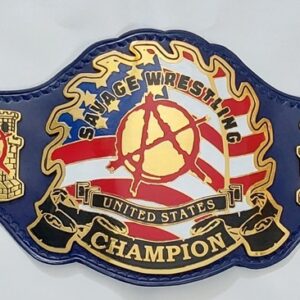
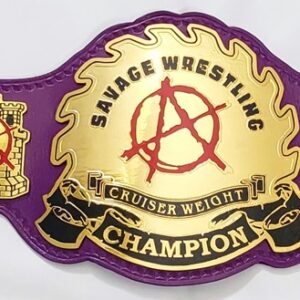
Leagues usually order several at once, one per weight class, with the league logo on the centre plate and the division on the side plates. If you’re running something smaller, like a member of the month or a transformation challenge, we’ve covered that in our guide to championship belts for gym competitions.
How to Tell Real Kickboxing Championship Belts From Cheap Trophy Straps
Photos lie. Almost every belt looks good on a product page. The difference shows up when it’s in your hands, and it comes down to three things.
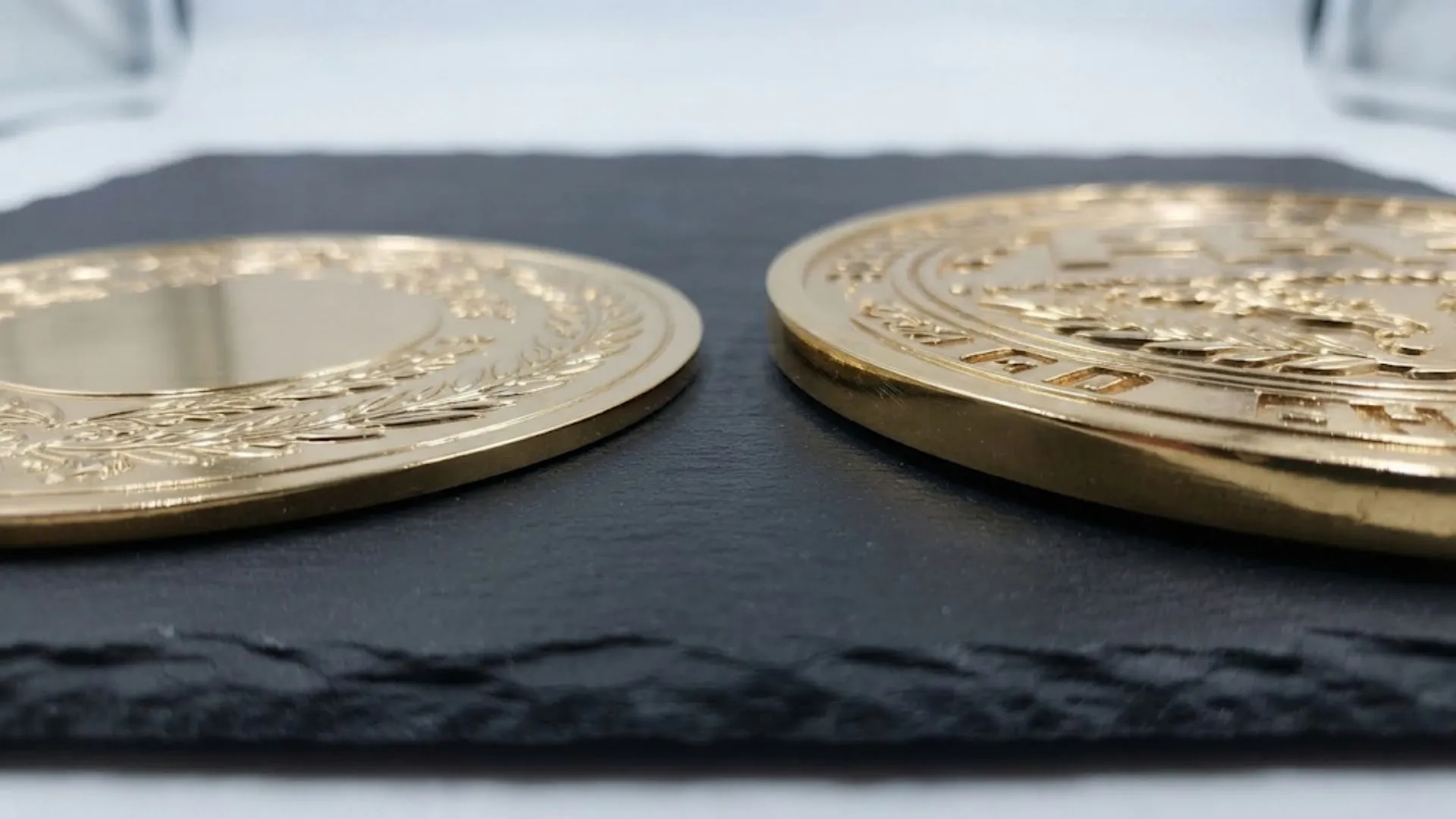
Plate Thickness and Weight
Thickness is the fastest tell. A thin plate flexes when you handle it and can’t hold a deep etch, so the design looks flat from across a room. We cut our etched plates in 2mm, 3mm and 4mm, and you feel the jump every time: a 4mm belt has real weight when it’s lifted overhead. If a listing won’t tell you the plate thickness, assume it’s thin.
Engraving Depth and Plating
Depth is what makes a design readable. Deep cuts throw shadow; shallow ones disappear under stage lights. We build kickboxing championship belts two ways: etched plates in brass or zinc, and silver mould casting, where the design is cast into the metal rather than cut into its surface. Cheap belts often skip surface prep before plating, which is why their gold peels within months. If you want the full breakdown of how the metals compare, read our guide to brass vs zinc championship belt plates.
The Strap: Artificial vs Real Leather
Our straps usually run 48 to 52 inches, sized so the belt sits properly across a fighter’s shoulder or around the waist for photos. We use artificial leather as standard because it’s consistent, holds its shape and stands up to being thrown around a changing room. Real leather is available if you want it. What you should avoid is thin vinyl with a printed grain: it cracks along the fold lines where the plates sit, usually within the first year.
How Much Does a Custom Kickboxing Championship Belt Cost?
A single custom etched kickboxing belt from Retro Shields costs between $125.51 (2mm brass) and $183.70 (4mm zinc). Silver mould casting runs $155 to $160. Every option includes your own logo, names, weight classes and colours.
| Plate option | Price for one belt (USD) |
|---|---|
| Etched 2mm brass | $125.51 |
| Etched 3mm brass | $149.75 |
| Etched 4mm brass | $164.87 |
| Etched 4mm zinc | $183.70 |
| Silver mould casting | $155 to $160 |
These are single-belt prices. If you’re ordering a full set for a league’s weight classes, send us the numbers through our custom and bulk orders page and we’ll quote the batch.
Most belts take 8 to 15 working days to make, depending on how detailed the design is. You don’t pay anything to place the order: we confirm every detail with you on WhatsApp first, and you can pay 50% upfront and the rest after you’ve seen photos of the finished belt.
For a deeper look at what drives the price, see our custom championship belt pricing guide. When you’re ready to start, here’s how to design your own championship belt step by step, or browse finished examples in our etching championship belts range.
Kickboxing Belts FAQ
What Is the Highest Belt in Kickboxing?
The top of the kickboxing belts ranking is a 10th dan black belt, which is very rare and usually given for decades of teaching. In professional kickboxing, the highest honour is a world championship belt.
How Many Belts Are There in Kickboxing?
Most schools put kickboxing belts in order using eight colours (white, yellow, orange, green, blue, purple, brown, black). Many UK schools use nine by adding red after white. Black belt then has ten dan degrees on top.
How Long Does It Take to Get a Black Belt in Kickboxing?
For most adults training two or three times a week, somewhere between three and five years. Some schools are faster, some much slower, and it depends heavily on how often you train and grade.
How Long Does a Custom Kickboxing Title Belt Take to Make?
At Retro Shields, 8 to 15 working days depending on the design. Simple etched designs sit at the shorter end; detailed, multi-plate designs take longer.
Can You Add Weight Classes and Fighter Names to a Kickboxing Belt?
Yes. Names, logos, weight classes, event dates and colours can all go on the plates. Leagues often put the organisation’s logo on the centre plate and the division on the side plates.



3 Comments