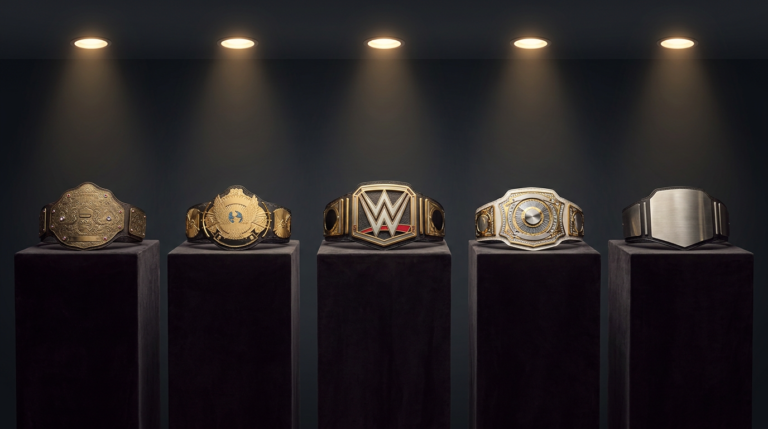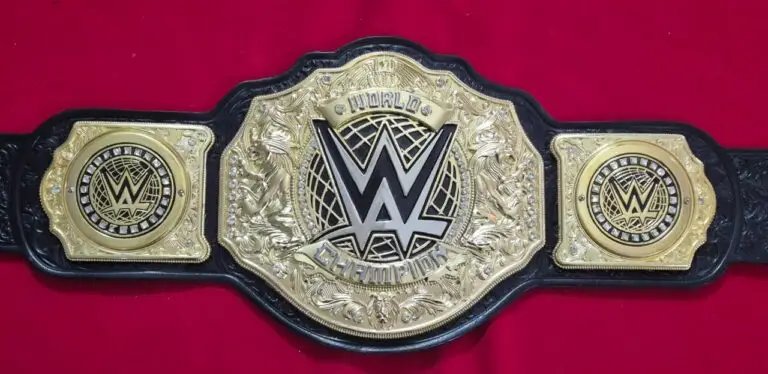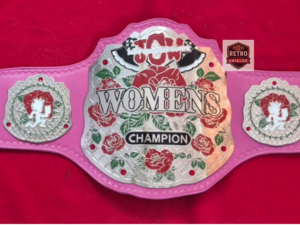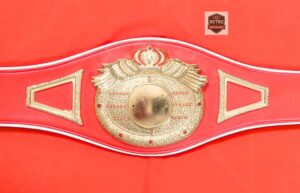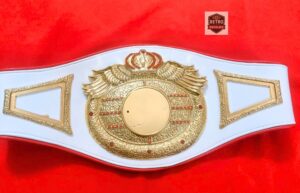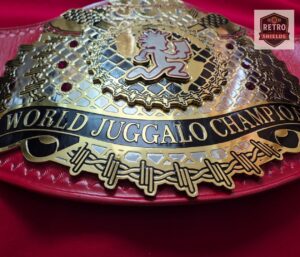
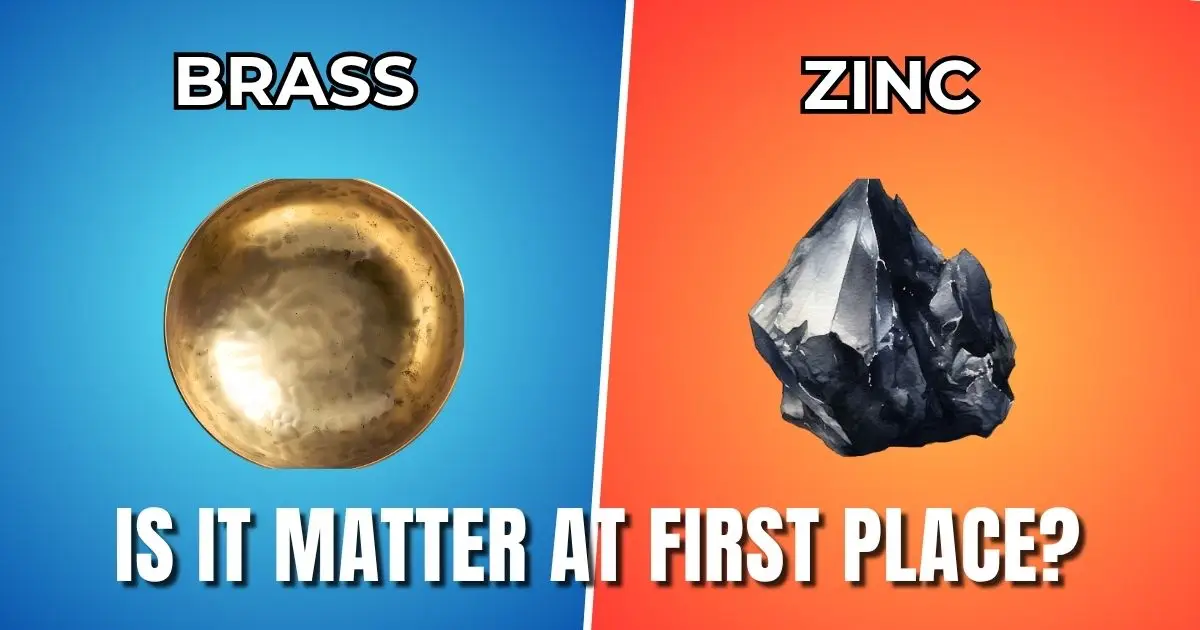
Most championship belt replicas are built from one of three plate materials: zinc alloy, solid brass, or a gold-plated finish over one of those two. The material sets the price, the weight, and how long the belt holds its shine, and after 22 years and more than 2,000 belts built, this is the breakdown we give collectors before they order, not the vague “premium materials” language most listings use. It is the same breakdown that explains what today’s boxing world championship belts and WWE’s newest title designs are actually built from.
In this article
- Zinc alloy plates
- Solid brass plates
- What “24K gold” actually means on a replica belt
- Zinc vs. brass vs. gold-plated: the comparison
- Strap materials: synthetic vs. real leather
- Why plate thickness matters more than the metal name
- FAQ
What is a zinc alloy belt plate?
Zinc alloy is a cast metal, usually zinc mixed with small amounts of aluminum and copper, that gets poured into a mold to form the plate shape before it is plated in gold or silver tone. It is the most common material in the replica belt industry because it casts fine detail well and costs less than brass to produce. A 2mm to 3mm zinc plate is light enough for kids’ belts and budget adult replicas, and it still holds crisp relief work on crests, lettering, and side plates.
The tradeoff is durability. Zinc is softer than brass, so a dropped belt or a bent plate is more likely to crack or warp rather than dent and hold its shape. It is the right call for a display piece that will not get thrown around a ring or handled at every gym session.
What is a solid brass belt plate?
Brass is a copper-zinc alloy, denser and more malleable than cast zinc, which is why it is the standard for belts that need to survive being worn, carried, or handed off in an actual match or event. A solid brass plate at 3mm to 4mm thickness bends slightly under pressure instead of cracking, keeps its shape after years of handling, and takes a deeper, more durable gold or silver mold-cast finish. It is also heavier, which is exactly what collectors mean when they say a belt “feels real” the moment they pick it up. Our own full-size WBC-style replica, for example, runs 2.6kg (5.7lb) in brass with a 1cm-thick center plate, weight that a thinner zinc casting cannot replicate.
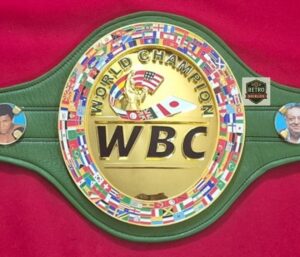
2.6kg of gold-tone plated brass on a full-size green leather strap, the weight and thickness collectors compare every other belt to.
What does “24K gold” actually mean on a replica belt?
On almost every replica belt, including ours, “gold” means a gold-tone electroplated finish over a zinc or brass base, not a solid gold plate. A thin layer of gold, sometimes measured in microns and marketed as 24K gold plating, is electroplated onto the cast metal underneath. This is the same process used on real championship-grade jewelry and trophies, and it is what gives a replica belt its shine and color without the cost or weight of solid gold, which would make a full-size belt both unaffordable and too heavy to wear.
What separates a good gold-tone finish from a cheap one is plating thickness and the quality of the base casting underneath it. A thin flash-plated finish over a rough zinc casting will show brassy or silver patches within months of handling. A properly plated finish over a well-cast brass or zinc base holds its color for years with basic care, which is why we finish ours with the same mold-cast process used on the original belts, not a sprayed-on coating.
Zinc vs. brass vs. gold-plated finish: the comparison
| Material | Typical thickness | Feel | Best for |
|---|---|---|---|
| Zinc alloy | 2mm to 3mm | Light, crisp detail, more brittle | Display belts, budget builds, kids’ sizes |
| Solid brass | 3mm to 4mm+ | Heavy, bends rather than cracks | Belts that get worn, carried, or handled often |
| Gold-tone plating | A finish, not a base metal | Shine and color over zinc or brass | Every belt above; quality depends on plating depth |
Strap materials: synthetic vs. real leather
The strap matters almost as much as the plates. Synthetic leather is the standard across most replica belts, it is durable, holds color well in black, red, white, or blue, and resists cracking better than low-grade genuine leather in humid climates. Real leather straps show up on premium builds and give a softer, more broken-in look and feel from day one, but they need more care to avoid drying out over years of display. Either option holds up fine when stored on a stand rather than folded flat, which is the single biggest factor in how long a strap keeps its shape.
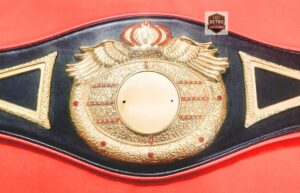
Solid brass, silver mold casting, gold-tone finish, and a synthetic leather strap in black, red, white, or blue. Your logo, name, or title on the plates.
Why plate thickness matters more than the metal name
Two belts can both say “brass” and feel completely different. A 2mm brass plate flexes and can dent with regular handling. A 4mm plate holds a crisp edge and resists warping even after years of use. When you’re comparing listings, thickness in millimeters tells you more about durability than the material name alone, and any maker who won’t give you that number is a sign to keep looking. We list plate thickness on every custom build for exactly this reason: it’s the spec that actually predicts how the belt holds up, not the marketing copy around it.
Frequently asked questions
Is zinc alloy or brass better for a championship belt replica?
Brass is more durable and holds up better to regular handling or wear, while zinc alloy is lighter and less expensive. For a display-only collector’s piece, zinc is fine. For a belt that will be worn, carried, or handed off at events, brass is the better investment.
Are replica championship belts made of real gold?
No. “Gold” on a replica belt refers to a gold-tone electroplated finish over a zinc or brass base, not solid gold. This is standard across the entire replica belt industry and is what makes full-size belts affordable and light enough to actually wear.
How much does plate thickness affect belt quality?
Significantly. A 2mm plate is noticeably lighter and more prone to bending or cracking than a 4mm plate in the same material. Thickness is a better durability indicator than the material name alone.
How long does a gold-plated replica belt keep its shine?
A well-plated finish over a properly cast base holds its color for years with basic care, wiping plates with a soft cloth and storing the belt on a stand rather than folded. Thin, low-quality plating over a rough casting can show wear within months.
What strap material is best for a championship belt?
Synthetic leather is more durable in humid conditions and holds color better long-term, while real leather offers a softer feel that develops character over time. Both hold up well if stored properly.
Build a belt to your own spec
Choose brass or zinc, your plate thickness, and your finish. 22 years of making these means we can tell you exactly what you’re getting before you order.